Top Reasons to Schedule Gutter Cleaning in Hackettstown This Season


Gutters tend to disappear into the background until they fail. By the time a homeowner notices water pouring over the edge during a storm, staining on the siding, or a muddy trench near the foundation, the problem has usually been building for months. In a place like Hackettstown, where the weather swings from leaf-heavy autumns to freeze-thaw winters and soaking spring rains, that slow buildup rarely stays harmless for long.
That is why seasonal gutter cleaning deserves a spot on the home maintenance calendar instead of the wish list. It is not glamorous work, but it protects some of the most expensive parts of a property: the roofline, fascia, soffits, siding, landscaping, basement, and foundation. Homeowners looking into Gutter Cleaning Hackettstown services are often reacting to a visible issue, but the real value comes from preventing the damage that never gets a chance to start.
Hackettstown homes take a beating from the seasons
Local climate matters more than many people realize. A house in a dry region can sometimes limp along with neglected gutters longer than a house in northwestern New Jersey. Hackettstown gets a mix of steady rain, sudden downpours, falling leaves, wind-blown twigs, and winter conditions that turn trapped water into solid ice. That combination creates perfect conditions for clogs and overflow.
In the fall, gutters can fill surprisingly fast, especially on properties with mature trees nearby. Even homes without large trees directly overhead still catch debris from neighboring lots. It does not take much to start a blockage. A mat of leaves at one downspout, a layer of granules from aging shingles, and a few small sticks can be enough to slow drainage and make water back up across the entire run.
Winter adds another layer of risk. When gutters hold standing water because they are clogged or pitched poorly, that water freezes. Frozen gutters become heavy. Ice can push against seams, bend hangers, and force water back toward the roof edge. Then spring arrives, bringing the kind of rain that exposes every weak point at once. What looked like a minor maintenance delay in October can turn into fascia rot and foundation moisture by April.
Overflow does not stay at the gutter line
A lot of homeowners think of gutters as a roof accessory. In practice, they are part of the water-management system for the whole house. Their job is simple: catch roof runoff and move it away from the structure in a controlled way. When they cannot do that, the damage spreads far beyond the gutter itself.
The first signs are often subtle. You might see dark streaks on the gutter face, drips at the corners after the storm has passed, or mulch washed out of beds beneath the eaves. Then the more expensive symptoms start showing up. Water repeatedly spilling over the front edge can soak fascia boards and soffits. On homes with wood trim, that creates a long, slow invitation for rot. On homes with aluminum trim wrap, the wood underneath may be deteriorating before the surface reveals it.
Siding is the next common casualty. Vinyl can get stained and splashed with dirt. Wood and fiber cement take on repeated moisture exposure that shortens their life. Brick homes are not immune either. Water running down masonry can contribute to efflorescence, mortar wear, and persistent dampness near the base of the wall.
The part homeowners worry about most, and for good reason, is the foundation. When downspouts clog or overflow near the house, water collects exactly where it should not. Over time, repeated saturation can settle soil unevenly, worsen basement seepage, and leave crawl spaces damp for long stretches. A seasonal gutter cleaning is cheap compared with waterproofing work, masonry repairs, or foundation correction.
One clogged downspout can create an outsized problem
People often picture a clogged gutter as a channel packed solid with leaves from end to end. Sometimes that happens, but many serious drainage issues start with a much smaller obstruction. A single blocked downspout can render an otherwise decent-looking gutter system ineffective.
Here is what that looks like in real life. The horizontal gutter fills during a storm, but instead of moving water down and away, it hits the blockage and backs up. Once the water level rises high enough, it spills over the edge at the lowest point or nearest seam. Homeowners may assume they need a new gutter because they see overflow, but the actual fix is often a proper cleaning and flush.
I have seen houses where one buried elbow was packed with roof grit and maple seed pods, while the rest of the system looked almost clean from the ground. During light rain, no one noticed. During a hard storm, the water poured off one corner so heavily it carved a trench beside the front steps. That is part of the problem with neglected gutters. The failure shows up under peak conditions, when the volume of water is highest and the stakes are highest too.
Winter turns minor neglect into structural stress
In Hackettstown, gutter cleaning is not only about rain. It is also about what happens when temperatures drop. Water trapped in debris does not simply sit there. It freezes, expands, and holds weight against the house.
A gutter full of compacted leaves and ice can become surprisingly heavy. Hardware loosens. Spikes pull away. Hidden hangers twist. Seams open. In some cases, the outer edge sags just enough to create a low spot, which traps even more water in the next cycle. Once the pitch is compromised, the system drains poorly even after the weather improves.
There is also the issue of water backing up near the roof edge. Clean gutters do not prevent every ice problem, but clogged gutters definitely make freeze-related issues worse. If melting snow has nowhere to go, it can refreeze at the eaves. That increases the chance of water working under shingles or saturating the roofline materials. Homeowners often discover this later as peeling paint, interior ceiling stains near exterior walls, or soft fascia wood during spring repairs.
Scheduling service before the cold sets in is one of the smartest preventive moves a homeowner can make. It is much easier to remove leaves than to deal with frozen debris in January or the repairs that follow in March.
Pests are drawn to neglected gutters for a reason
Standing water and decomposing organic matter create a habitat, not just a mess. Gutters packed with wet leaves become attractive to insects, including mosquitoes in warmer months if water pools long enough. Birds pull from clogged gutters for nesting material. Rodents sometimes use overgrown rooflines and debris-packed corners as sheltered travel paths.
This is not always dramatic. Most of the time, homeowners do not notice pests in the gutter itself. They notice related problems around the house. More insects near entry points. Birds repeatedly gathering at one roof corner. Small plants or weeds sprouting out of the gutter trough, which means enough organic material has collected to support growth.
Once that happens, cleaning gets harder and the system gets heavier. Roots and dense compost-like buildup hold moisture against metal and seams. Even durable gutter materials age faster under those conditions. The issue is no longer simple debris removal. It becomes restoration of function.
Landscaping damage adds up quietly
One of the most frustrating side effects of clogged gutters is how often they ruin work homeowners have already paid for. A carefully mulched bed, a row of foundation shrubs, or decorative stone edging can be damaged by concentrated runoff from a single storm.
When gutters overflow, water does not spread gently. It falls in sheets or torrents, often from a consistent point. That kind of discharge digs channels into flower beds, splashes soil onto siding, flattens annuals, and shifts mulch into walkways or driveways. If the ground slope already directs water toward the house, the problem compounds.
This is where timing matters. A gutter cleaning before the rainy season or before winter can help protect not only the home itself but also the curb appeal investments around it. Homeowners often spend hundreds or thousands on landscaping and then lose part of that value because the roof drainage system was ignored.
Small maintenance beats emergency repair every time
Most gutter-related damage does not happen because the system is old beyond saving. It happens because routine maintenance was deferred long enough for minor issues to stack up. A loose bracket is easy to resecure during a service visit. The same bracket, ignored through a season of clogs and overflow, can contribute to a sagging section, separated seam, or fascia repair.
This is one of the biggest reasons to schedule service this season rather than waiting for obvious failure. Preventive maintenance gives you options. Emergency repair narrows them.
A typical cleaning visit often reveals problems that are still manageable: a downspout elbow starting to choke with grit, a seam that needs resealing, a section that is holding water because pitch has shifted slightly, or a splash block that has drifted out of place. Catching those details early keeps the repair small. Waiting until water is entering the basement or staining interior drywall changes the budget fast.
For many homeowners, the real cost of https://devinjggx173.halcyonledger.com/posts/best-time-of-year-for-gutter-cleaning-in-hackettstown postponing gutter cleaning is not the cleaning itself. It is the domino effect of related repairs that were avoidable.
Why this season matters more than “sometime soon”
There is a practical difference between knowing gutters need attention and choosing the right window to get it done. Seasonal timing is not arbitrary. It should line up with the debris load on the house and the weather stresses ahead.
A property surrounded by deciduous trees often needs service after most leaves have dropped, not after the first few cool weekends of fall. A home that went through winter with partial blockage may need a thorough spring cleaning even if the gutters do not look terrible from the driveway. Storms can also deposit shingle grit, seed pods, and branch fragments that are easy to miss from the ground.
If you are unsure whether this is the right season to schedule Gutter Cleaning Hackettstown service, a few signs usually settle the question:
- Water spills over the edge during rain.
- You can see plants, mud, or leaf mats in the troughs.
- Downspouts drip weakly or not at all during a storm.
- The gutter line sags, or sections pull away from the fascia.
- Soil, mulch, or stone below the roof edge keeps getting washed out.
Those symptoms mean the system is already underperforming. Even if no interior damage is visible yet, water is going somewhere, and it is rarely somewhere good.
Professional cleaning is not just about getting debris out
Some homeowners are comfortable on ladders and handle basic maintenance themselves. On a one-story ranch with clear access, that may be reasonable if done safely and consistently. But many properties are not that simple, and even a thorough DIY effort can miss important issues.
A professional cleaning should do more than scoop leaves. It should include checking flow through the downspouts, watching for standing water that suggests improper pitch, looking at seam integrity, noting loose hangers, and identifying areas where runoff is overshooting or leaking behind the gutter. In other words, the best service is part cleaning, part inspection.
That distinction matters because clean gutters that are poorly pitched still fail. Gutters with a hidden split at a seam still leak. A downspout that empties too close to the foundation still creates moisture problems, even if it is technically unclogged. Good technicians notice these details because they have seen how small failures become big ones.
There is also the safety factor. Ladder accidents are common enough that they should not be treated casually. Add wet leaves, slippery surfaces, second-story heights, or uneven grading around the home, and the job becomes more hazardous than many weekend projects. Homeowners often underestimate how awkward gutter work is until they are halfway through it with a full bucket and a ladder leg sunk into soft soil.
Gutter guards help, but they do not end maintenance
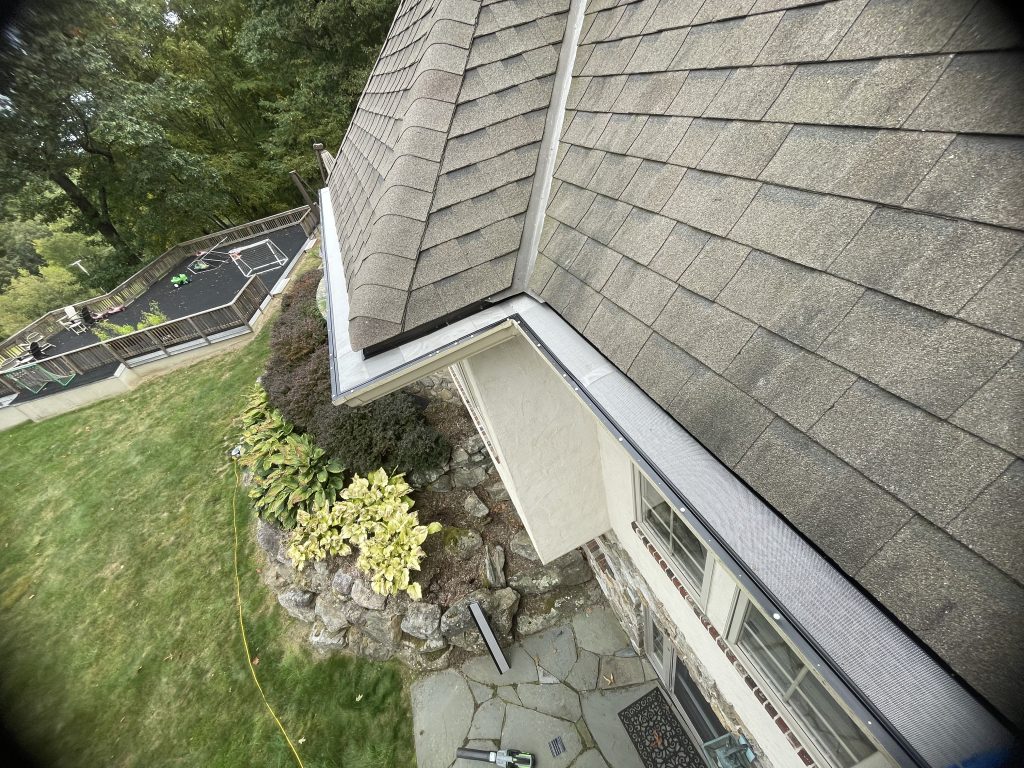
A common point of confusion comes up with homes that already have gutter guards or screens. Homeowners assume they are maintenance-free and are surprised when overflow starts anyway. Guards can reduce the amount of large debris entering the system, but they do not eliminate maintenance in most real-world conditions.
Fine material still gets through many products. Pine needles, shingle granules, seed pods, and sludge can accumulate over time. Some guard designs also allow debris to collect on top, which can interfere with water entry or create spillover during heavy rain. Others make cleaning more involved because sections must be lifted to access buildup below.
That does not mean guards are a bad idea. On the right house, they can reduce cleaning frequency and cut down on major clogs. But they work best when paired with periodic inspection, not as a substitute for it. If a home in Hackettstown is surrounded by trees, the expectation should be lower maintenance, not zero maintenance.
What homeowners often miss from the ground
One reason gutter neglect persists is that the early warning signs are easy to miss unless you know where to look. From the yard, a gutter can appear fine because the front edge looks straight and the debris sits below the lip. Problems show themselves differently depending on weather conditions.
During rain, watch for overflow at corners, water running behind the gutter, or one downspout releasing much less water than the others. After the storm, look for damp streaks on siding, puddling near the foundation, or splatter marks on windows and trim. On dry days, sagging sections, rust spots, separated joints, and vegetation growth all point to a system that is overdue for service.
Inside the home, the clues are even less obvious. A musty basement corner, paint bubbling near an exterior wall, or recurring dampness along a foundation section may not be diagnosed as a gutter issue right away. Yet poor roof drainage is often part of that story.
This is why seasonal service can be so valuable. It interrupts the cycle before the house starts signaling distress in more expensive ways.
Clean gutters support the rest of your exterior maintenance
A well-maintained gutter system helps every other exterior component do its job better. Roof edges stay drier. Siding stays cleaner. Foundation plantings suffer less washout. Walkways and entry points remain safer because runoff is directed away rather than dumped in sheets where people step.
This is especially relevant if you are planning other home improvements. Pressure washing, painting trim, installing landscaping, sealing a driveway, or addressing basement moisture all benefit from proper water control above. It makes little sense to invest in cosmetic or structural upgrades while the drainage system remains compromised.
There is also the resale angle. Buyers and home inspectors notice signs of unmanaged water quickly. Staining, rot, erosion, and poor runoff patterns raise questions about what else has been deferred. Clean, functioning gutters do not make a flashy impression, but neglected ones certainly do.
The real reason to book now
The best reason to schedule gutter cleaning this season is simple: water does not wait. It will test every seam, low spot, clog, and loose fastener the next time conditions line up. Once the rain comes hard, the leaves compact, or the freeze hits, your maintenance window starts shrinking.
Homeowners in Hackettstown do not need a dramatic roof leak to justify service. If the gutters are carrying a season’s worth of debris, if the downspouts have not been checked, or if runoff has been landing too close to the house, that is enough reason. Preventive work is rarely exciting, but it is one of the few home maintenance tasks that can protect so many systems at once.
For most properties, gutter cleaning is not about appearance, though cleaner rooflines are a nice side benefit. It is about control. Control over where rainwater goes, how the roof edge ages, how the soil behaves around the foundation, and whether small defects stay small. That is why Gutter Cleaning Hackettstown service tends to pay for itself not in visible upgrades, but in the repairs a homeowner never has to make.
Just Gutters LLC
Address: 262 Main St, Hackettstown, NJ 07840
Phone number: +12013319454
FAQ About Gutter Cleaning Hackettstown
How much should a gutter clean cost?
Professional gutter cleaning typically costs between $163 and $333, with a national average of around $210 to $250 for a standard-sized home.
What months should you clean gutters?
You should clean your gutters twice a year—once in late autumn (November to December) and once in late spring (April to May).
Is it worth paying for gutter cleaning?
Yes, paying for gutter cleaning is worth it because it prevents thousands of dollars in water damage, roof leaks, and structural repairs.